Got a denial letter? Read it as an opening position, and price your next move
Reservation of rights, partial payment and flat denial each mean something different in a Texas claim, and each one carries a different cost if you accept it.
Reservation of rights letter. This tells you the insurer is still investigating while preserving every defense it might use later. It is neither an approval nor a denial, and the claim stays open.
Partial payment risk. Money arriving on a claim can look like agreement even when nobody negotiated the amount. Depositing a check does not usually waive your right to a supplement, but the file tends to go quiet unless you push back in writing.
Denial forces the question. An outright denial has to name a reason tied to policy language, which gives you something specific to argue with. That clarity is often more useful than an open file drifting for months.
Anti-concurrent causation
Some policies say that if an excluded cause contributes at all, the whole loss is excluded. Carriers read this clause broadly, and courts have not always agreed with the broadest reading.
Wind versus rising water
Standard homeowners policies exclude flood, so characterizing damage as surface water moves the loss to a separate federal program. Water lines, plumber reports and timestamped photographs are what challenge that characterization.
Request the full claim file
Ask in writing for the adjuster's itemized estimate, field notes, photographs and any engineering report. What the carrier relied on is often thinner than the letter suggests.
A single lump-sum number from a roofer is close to useless in a dispute. Line-by-line scope, quantities and unit prices are what make the gap between two estimates visible.
An itemized contractor estimate
The letter arrives four weeks after the adjuster walked the roof, it runs two pages, and somewhere on the second page is a sentence that begins "based on our investigation." What follows is a conclusion, not a finding of fact. An insurance company writing to you about your own claim occupies roughly the position of the other driver's account of an intersection: informed, interested, and not binding on anyone. Texas law gives that letter consequences, mostly deadlines that start running, but it does not give it the force of a judgment. The distinction matters because the three common outcomes cost you very different amounts if you accept them quietly.
Three letters, three different things happening
A reservation of rights says the carrier will keep investigating and keep paying its own costs while preserving every defense it might later want. It is not a denial and it is not an admission. It is a pause with a warning attached, and the practical cost of ignoring one is that months pass, your own memory of the storm date softens, and the roof you tarped becomes a roof the insurer says failed from age. A partial payment is more dangerous, because it looks like agreement. Cash arrives, the claim number stays open, and the file quietly closes around a number nobody negotiated.
An outright denial is the cleanest of the three, oddly enough, because it forces the question. The letter has to state a reason, that reason has to point to policy language, and once it does you can read the same paragraph the adjuster read. Denials get reversed regularly, not because the carrier had a change of heart but because the stated ground turns out to be thinner than the letter implied. What costs money is treating the denial as the end of the process and paying for the repairs yourself, which resets the dispute into a reimbursement fight you are far less likely to win.
The exclusion is usually doing more work than it can carry
Read the reason closely and it is almost always an exclusion applied broadly: wear and tear, deterioration, faulty workmanship, cosmetic damage to metal roofing, or the water exclusion separating wind-driven rain from surface flooding. Each of those has a real meaning inside the policy and a much larger meaning inside adjuster shorthand. A roof with granule loss in three places and eighteen fresh hail bruises is not a worn-out roof, though the photographs a field adjuster uploads may show only the granule loss. Anti-concurrent causation clauses get cited the same way, as though any excluded contributing cause defeats the whole claim.
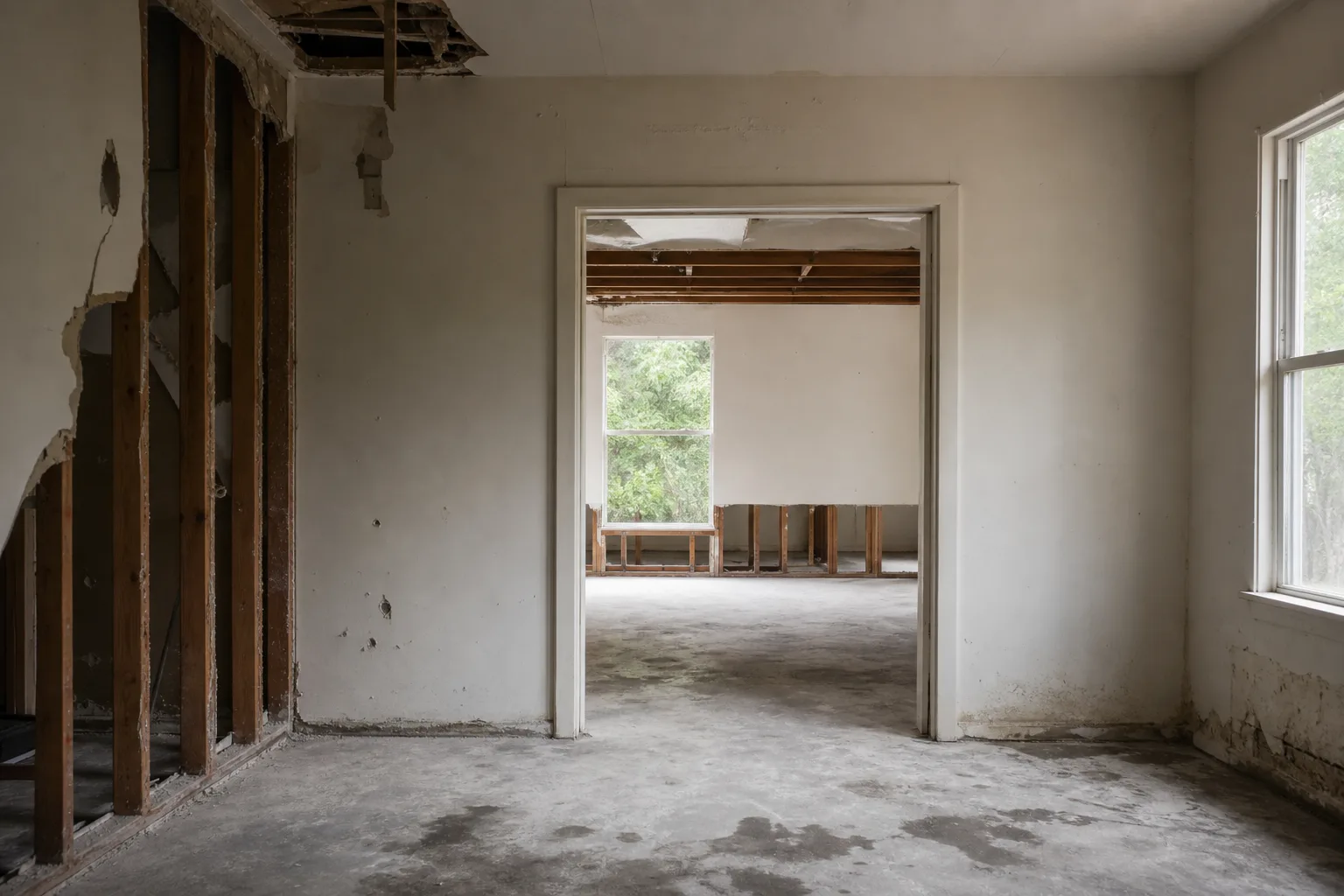
The wind-versus-water split is where the most money moves. Flood is excluded from nearly every homeowners policy and sits instead with the National Flood Insurance Program, which FEMA is responsible for administering, so a carrier that can characterize damage as rising water has moved the loss off its own paper entirely. That characterization is a judgment call about a house that was full of water on a day nobody was standing in it. Independent evidence, a plumber's report, an engineer's inspection, water lines photographed against a door frame, is what turns the call back into a question.
Four things worth doing before anyone calls a lawyer
Ask in writing for the complete claim file: the adjuster's estimate line by line, the field notes, the photographs, and any engineering report the carrier relied on. Get your own estimate from a contractor who will itemize rather than write one number on a sheet, because a licensed roofer's scope is the document that makes the gap visible. Write the carrier a letter that quotes the exclusion it cited and explains, in three or four sentences, why the facts do not fit it. Then note the dates: when you reported the loss, when they acknowledged it, when each payment or denial arrived.
Those four steps cost you a few hundred dollars and a weekend, and they do two things at once. They frequently produce a supplemental payment without any further fight, because a documented gap is cheaper for the carrier to close than to defend. They also build the file a Dallas Insurance Claim Lawyer would otherwise spend billable months assembling, which changes the arithmetic of the contingency fee before you ever sign one. Under Chapter 542A a claimant has to give the insurer written pre-suit notice and a chance to inspect, so the paperwork is not optional anyway.
What the decision actually costs
Accepting a partial payment on a hail claim underpaid by twenty thousand dollars costs twenty thousand dollars plus whatever the unrepaired decking does over the next five years. Fighting it through appraisal costs your appraiser's fee, half the umpire's, and roughly two to four months. Litigating costs a third or more of the recovery, plus the prompt-payment interest and fees that Chapter 542 may add back if the carrier missed its statutory deadlines. Run those three numbers against each other with your contractor's estimate in hand and the right answer usually announces itself without much agonizing.
The letter in your hand is the carrier's opening number, written by someone who has not seen your attic since the day of the inspection and may never see it again. What moves it is a specific, documented, dated response that makes the gap between two estimates impossible to characterize as a difference of opinion.